


Skip to Content
Categories:

Are Our Attention Spans Getting Worse?

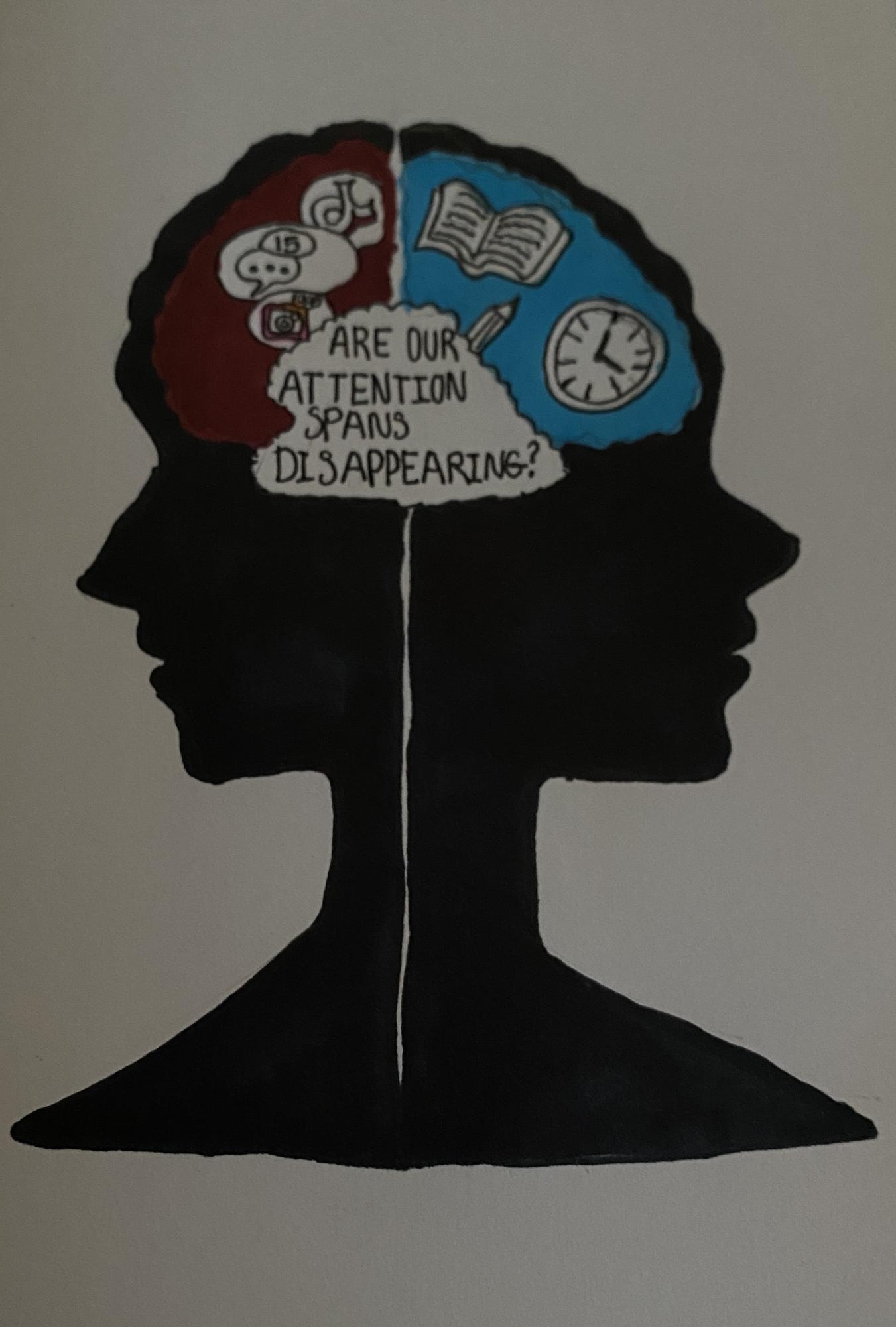
Drawing of two different brains
Deisy Chamu

It feels harder to focus than it used to. Homework takes longer, reading a chapter of a book feels exhausting, and everything takes a month to finish. Even watching a movie without checking your phone can be a challenge. Many students are starting to wonder, “are our attention spans actually getting worse?”

Student on their phone while teacher is talking

One major reason this could be happening is because of how fast and constant digital content is today. Platforms like TikTok and Youtube are designed to keep people scrolling. The videos are fast, usually under a minute, and constantly changing. Our brains get used to quick entertainment. When we switch to something slower, like reading, studying, or listening to a lecture, it can suddenly feel boring or too quiet.

Notifications also play a big role. Phones buzz all day with messages, updates, and reminders. Even if we don’t check them, our brain knows they’re there and we can’t ignore it. That constant interruption makes it harder to fully concentrate on one task. Multitasking might feel productive, but studies show it actually decreases focus and memory.

Student on their phone while teacher is talking (Deisy Chamu)

However, some experts argue that attention spans aren’t necessarily shrinking, we’re just adapting to a faster paced world. Researchers say technology can also train the brain to process information quickly and switch between different tasks. According to a research review published in the journal Frontiers in Psychology, the effect of digital media on attention depends on how people use technology. Today’s teens can process information quickly, switch between tasks easily, and learn visually at a rapid pace. The real issue may not be that we can’t focus, but that we rarely practice deep focus anymore.

At the same time, not all teens struggle with focus. Some students are still able to read for long periods, stay off their phones while studying, and manage their time well. In fact, many teens are learning how to set boundaries with technology, whether that means deleting certain apps during the school week or turning off notifications. It shows that the issue isn’t about being a teenager, it’s about habits. With practice and self awareness, focus is something that can be improved.

So what can help? Small changes like putting your phone in another room while studying, turning off notifications, or setting a timer for focused work can make a difference. Attention is like a muscle, the more you train it, the stronger it gets.

In the end, technology isn’t the enemy. However, if we don’t control how we use it, it might start controlling how well we think.

Source used for this information.

More to Discover