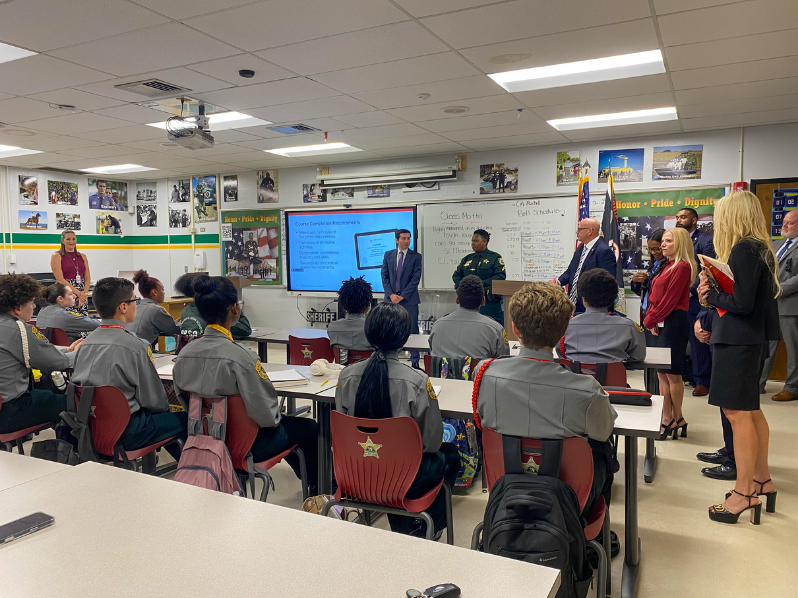
Around 2:00 p.m. on Wednesday, December 3, U.S. Department of Labor officials visited Santaluces Community High School to tour our career academies. Mr. Keith Sonderling, the U.S. Deputy Secretary of Labor, and Mr. Troy Selberg, the Director of Workforce Initiative, are working towards America’s Talent Strategy, which aims to reshape the country’s workforce development. The Workforce of Tomorrow is one piece of the puzzle that really focuses on the future of America’s workforce, and they think the best way to do that is to first look at the workforce education in schools.
They visited four academies in total: Cybersecurity, Criminal Justice, JROTC, and Culinary Arts. Each academy sponsor spoke about what their academy does and how it contributes to real-life skills needed for joining the workforce. Both Mr. Sonderling and Mr. Selberg got to speak to the programs about their mission and goal, while also getting to interact with some of the students who are involved in the academies.
I got to ask a member from each of the academies I was able to visit about how the experience was for them:
- Kambreya Bent (11th grade, Lieutenant of Criminal Justice): “It was a very interesting and enlightening experience meeting someone from the White House and who works in government, especially because that’s the kind of career I want to pursue in the future. It gives me a different perspective.”
- Rachel Bain (11th grade, JROTC): “It was a great and really professional experience. I was really happy JROTC was getting recognized for all the hard work we do. The Secretary was very nice and respectful, asking us plenty of questions.”
- Grace Hanley (12th grade, Culinary Arts): “It was very engaging, and we were very lucky to receive this opportunity. I was so excited to meet somebody in a position I look up to.”
Throughout the visit, I learned that the Department is planning to invest and use more technology to improve the future workforce. By doing this, a lot of funding will go towards the academies so that students get the proper foundation they need for life after high school.
After the visit at the Culinary Arts academy, I was able to interview Mr. Selberg and ask him what stood out to him the most during his visit:
“It was the fact that there’s not only one vertical that’s going to support the workforce in America, but multiple verticals. The students here have the opportunity to get into a bunch of different programs where most high schools only have one. You’re going to have as many as six academies here.”
Later in the week I got the chance to interview Principal Robinson and ask about her perspective on how the workforce is going to change in the future:
“Knowing that they’re giving students opportunities to really get hands-on experience for when they go on to the workforce is really cool. Everyone isn’t going to college, which is absolutely fine, [Mr. Sonderling] even mentioned that in my conference room. So, the goal is to make sure that they’re finding resources to help students when they go straight to the workforce after high school, and for them to become better citizens and provide gainful employment.”
I later reached out to Mr. Sonderling and asked him a few questions about the whole experience:
How do you see high school career academies preparing students for the future workforce? Was there anything you saw today that you think other schools across the country could learn from?
“When it comes to preparing students for the workforce of the future, early exposure and awareness is key. It’s great to see schools like Santaluces High School getting students hands-on career experience long before college and job decisions come along. Career academies equip young people with the skills and education they need to dive into well-paying jobs immediately after—-and sometimes even during—-high school. Recruiting and retaining the talent we have right here in America will help us fill an annual labor shortage of over 700,000 skilled jobs.”
How can schools ensure all students have the access to high-quality career training opportunities?
“I believe schools are vital partners in ensuring that our children and grandchildren have the skills and training they need to thrive in a rapidly-changing economy. Boosting AI literacy, teaching students how to work hand-in-hand with AI, exposing kids to different occupations starting in middle school, and connecting them with Registered Apprenticeships and industry-aligned training as high schoolers are all keys to unlocking success in America’s Golden Age.”
What barriers do you think students face when entering the workforce, and how can schools help remove them?
“The biggest issue students face upon graduation is misalignment between their education and the needs of employers. That’s why the Department of Labor is partnering with the Department of Education to help unify K-12 and workforce programs to ensure that students build the foundational skills they need early on. It’s crucial that schools expand talent pipelines through career and technical education programs in addition to Apprenticeships so that students are ready to hit the ground running after graduation.”